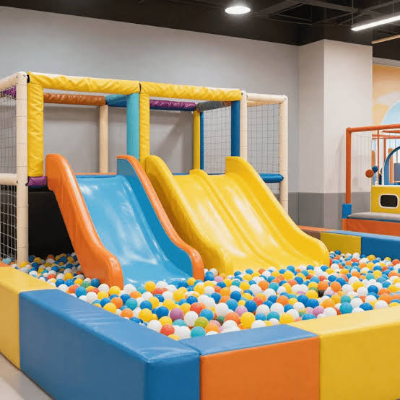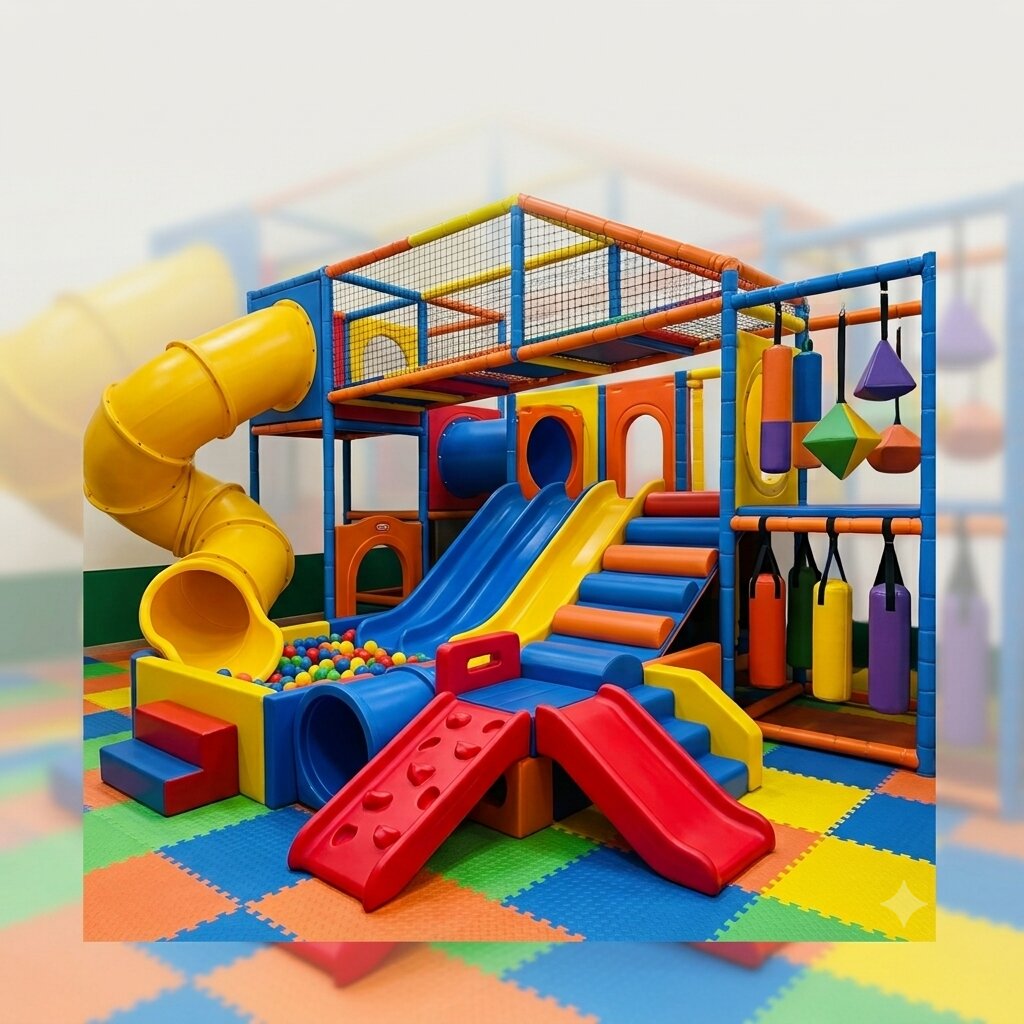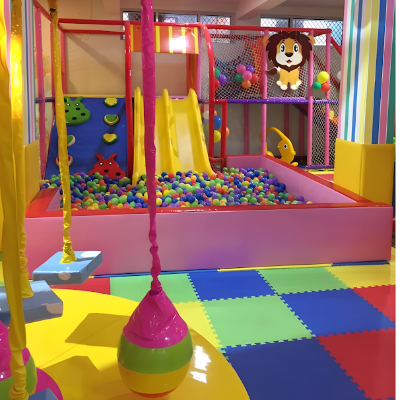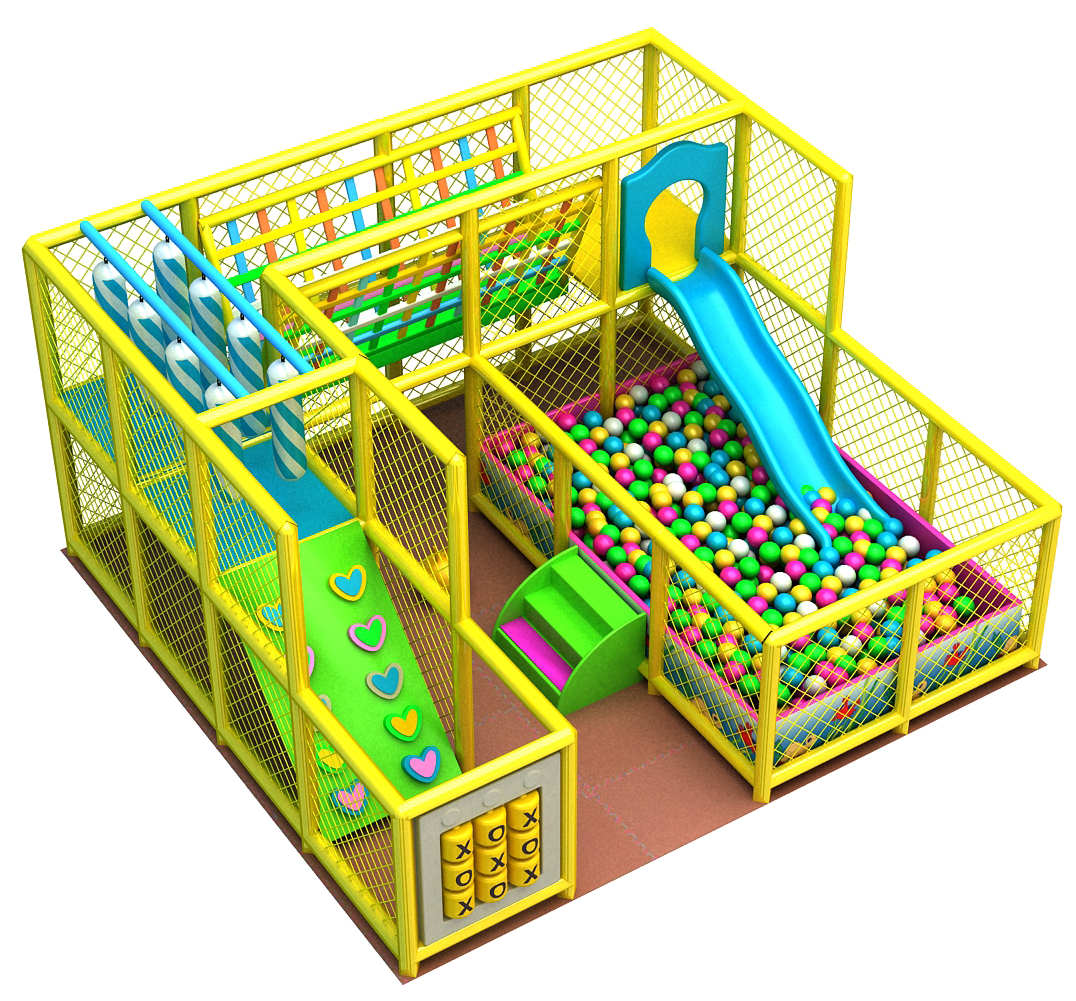
A trampoline park lives or dies on one thing: how well its equipment holds up under relentless daily bouncing. Unlike casual backyard trampolines, Trampoline Park Equipment must handle hundreds of jumpers a day, absorb constant impact, and remain perfectly safe hour after hour. Every component we manufacture from the steel substructure to the jump mats is engineered specifically for this level of continuous commercial use, not adapted from consumer-grade products.
Working with an experienced Trampoline Park Manufacturer means starting with the right foundation: hot-dip galvanized steel frames that resist rust and metal fatigue, permanent-pin fastening systems instead of weld-only joints for easier maintenance, and premium UV-stabilized jump mats that keep their bounce and color even under constant sunlight through skylights or windows. Springs are selected and rated specifically for continuous commercial cycling, not just peak load, since a trampoline park spring fails from repetition long before it fails from a single hard landing.
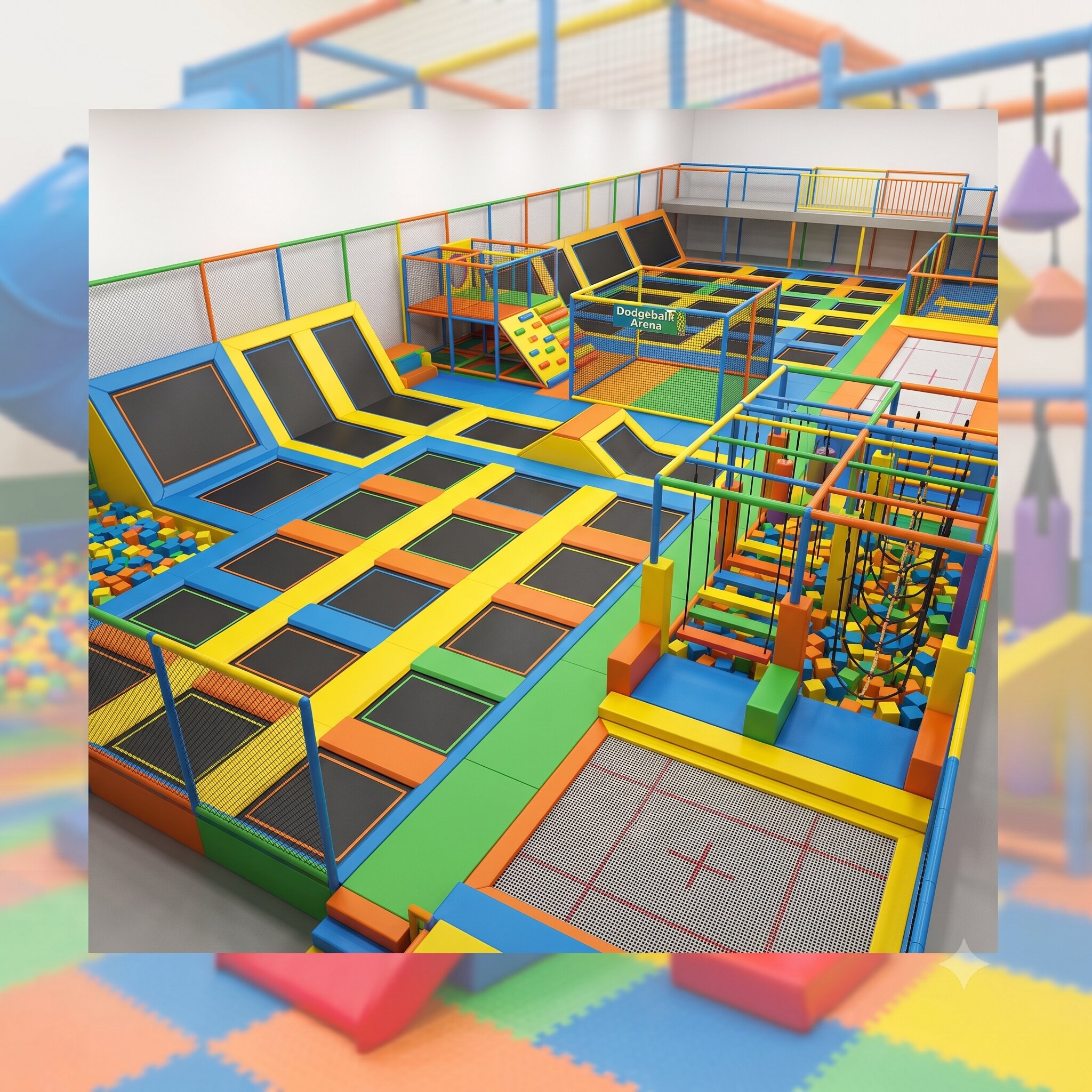
An Indoor Trampoline Park is rarely just rows of trampolines it's a connected system of attractions designed to keep guests moving between zones. Our layouts typically combine open jump courts, angled wall trampolines for tricks and rebounds, dodgeball or volleyball courts built directly into the trampoline grid, and dedicated performance zones for aerial skills. Court dividers, padded support columns, and clear sightlines are all planned into the design from the start, so staff can supervise multiple zones at once without blind spots.
No trampoline park is complete without a proper Foam Pit a deep, cushioned landing zone where jumpers can safely attempt flips and aerial tricks. We engineer foam pits with layered foam cube configurations that absorb impact evenly, paired with a mesh entry system that lets jumpers exit easily without loose cubes creating a hazard. Pit depth, cube density, and edge padding are all calculated based on expected jump height and the type of tricks the zone is designed for.
Every Commercial Trampoline Equipment package we deliver is built around a layered safety approach: fully padded perimeter walls covering all spring and frame areas, safety netting dividing individual court sections, and shock-absorbing flooring surrounding every court to protect guests during entries, exits, and falls. Our Trampoline Safety Equipment is manufactured to comply with EN ISO 23659:2022, along with relevant ASTM and CE requirements, using fire-resistant, non-toxic materials throughout because in a high-traffic commercial park, safety compliance isn't optional, it's foundational.
Every successful Trampoline Court starts with proper planning. Our Trampoline Park Design process begins with a site survey and load-bearing assessment of your building, followed by detailed 2D layouts and 3D visualizations that map out court placement, safety zones, and guest flow before any equipment is fabricated. From there, we manage manufacturing, delivery, on-site installation, and final safety inspection, giving park operators a single point of contact from the first sketch to opening day.
Choosing the right trampoline park equipment isn't just about maximizing bounce it's about building an attraction that stays safe, compliant, and profitable through years of non-stop daily use.
FAQ
1. What materials are used in commercial Trampoline Park Equipment?
Commercial trampoline park equipment uses galvanized steel frames, UV-resistant jump mats, heavy-duty commercial-grade springs, and fire-resistant padding designed for continuous daily use.
2. How is an Indoor Trampoline Park different from a single trampoline court?
An indoor trampoline park typically combines multiple attractions open jump courts, wall trampolines, dodgeball zones, and foam pits into one connected facility, rather than a single standalone court.
3. How deep should a Foam Pit be for a trampoline park?
Foam pit depth depends on expected jump height and trick difficulty, but most commercial pits range from 3.5 to 5 feet deep, with layered cube configurations for even impact absorption.
4. What safety standards does Trampoline Safety Equipment need to meet?
Commercial trampoline safety equipment should comply with standards such as EN ISO 23659:2022, along with applicable ASTM and CE certifications for structural and material safety.
5. How long does a Trampoline Park Design and installation project take?
Timelines vary by size, but most projects move through site survey, design approval, manufacturing, and installation within roughly two to four months.
6. Do you provide ongoing support after installation of Commercial Trampoline Equipment?
Yes, we offer maintenance guidance, spare parts, and periodic safety inspections to keep commercial trampoline equipment compliant and performing safely long after opening day.